When I think about how the CFO role has changed over the last few years, one word comes to mind: expectation.
The expectation to influence, not just report. The expectation to guide decisions, not just present numbers. The expectation to operate at pace, while still maintaining control and credibility across the business.
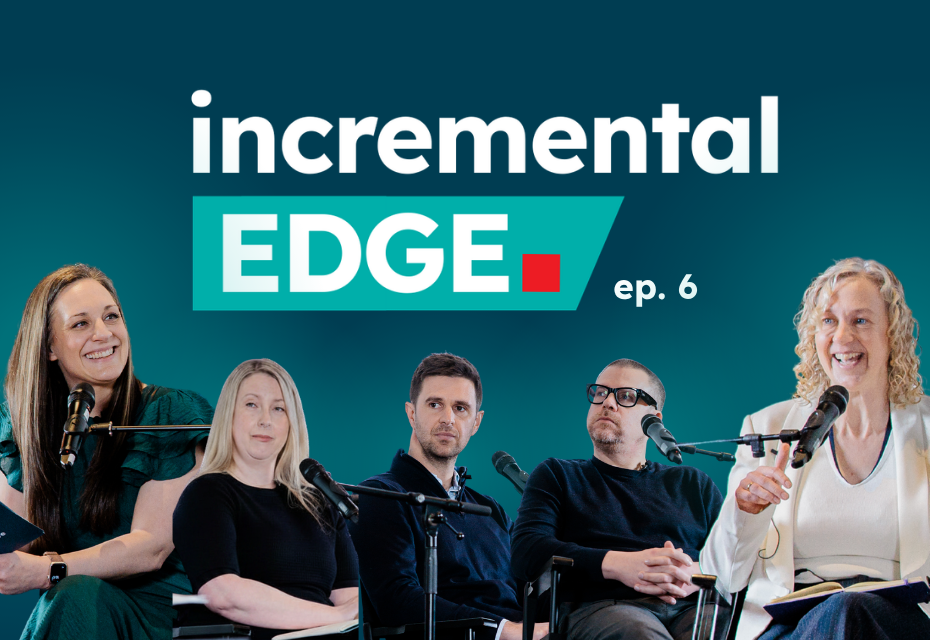
That’s exactly what we set out to explore in this live panel discussion, recorded as part of our Investment Savvy CFO series at our recent Incremental Edge event.
What I found particularly interesting was how quickly the conversation moved beyond technical finance capability. Nobody questioned its importance, but there was a clear consensus from the panel that technical expertise is now the baseline, not the differentiator.
What matters is what finance leaders do with that expertise.
Four perspectives on modern finance leadership
To explore that shift, I was joined by a brilliant group of leaders, each bringing a very different perspective to the conversation:
-
Katy Bruce, CFO at UCL Business, sharing how finance supports strategic decision-making inside a complex organisation.
-
Peter Holt, Partner at Drax Executive, offering a recruiter’s perspective on how CFOs are assessed and positioned.
-
Tom Wildig, Senior Investment Director at Palatine Private Equity, explaining what investors now expect from finance leaders.
-
Vanessa Worsley, Finance Director at Datel, bringing practical experience of driving operational change and preparing businesses for growth and investment.
Technical capability is expected. Influence is the differentiator.
One of the strongest themes throughout the discussion was the shift from reporting to influencing.
Katy described how finance leaders are increasingly expected to translate data into strategic direction, helping leadership teams understand not just what is happening, but what should happen next.
Vanessa reinforced this idea when she described the CFO as the “single source of truth”, but also someone who has to look beyond the rear-view mirror.
That phrase really stuck with me.
The modern CFO isn’t simply explaining historical performance. They’re helping shape future outcomes.
Tom expanded on this further from an investor perspective, describing the shift away from the “custodian of finance” mindset towards finance leaders becoming active drivers of value creation inside the business.
That expectation came through repeatedly during the discussion. Finance is no longer operating in the background. It’s increasingly embedded across the wider organisation.
Credibility comes down to one thing: no surprises
Another part of the discussion that really resonated with the room was credibility.
There was a very clear consensus across the panel that credibility is built through consistency, transparency and communication.
And one phrase came up multiple times:
“No surprises.”
Tom shared a particularly honest example about investors receiving a late call from a business saying they may not be able to make payroll the following week. His point wasn’t that businesses never face challenges. It was that problems become significantly harder to solve when they’re communicated too late.
That openness and transparency felt like a recurring thread throughout the discussion.
The expectation now is that CFOs communicate early, communicate clearly and bring potential solutions with them.
Pace is about access, not just speed
When people talk about pace in invested businesses, it’s easy to assume the conversation is about faster reporting cycles or tighter deadlines.
But what stood out to me was that the panel focused far more on access to information than speed alone.
Tom talked about the importance of having real-time visibility across the business so decisions can be made quickly and confidently.
Vanessa shared a very practical example from inside Datel around simplifying systems and building a unified finance function. One of her comments during the discussion was:
“Run the business like you’re selling tomorrow.”
It became one of the standout moments from the panel because it perfectly captured the importance of operational readiness, consistency and reliable data as businesses grow.
Communication matters more than ever
One of the more memorable moments from the discussion came when Katy shared a story about being asked by a CEO to explain deferred taxation without using the words “deferred” or “taxation”.
It highlighted something many finance leaders experience every day.
Technical expertise alone is not enough if the rest of the business cannot understand or act on the information being shared.
Peter made a great point around this too, describing the importance of finance leaders learning the language of the wider business rather than remaining isolated within finance terminology.
That ability to communicate, influence and build relationships increasingly feels like one of the defining characteristics of high-performing CFOs.
Technology should create capacity, not complexity
Technology and AI naturally became part of the conversation too, but interestingly, the panel’s perspective was very grounded.
There was far more focus on automation, process improvement and data quality than chasing trends.
Vanessa spoke about identifying repetitive tasks that could simply be automated to free finance teams up for more valuable work. Tom also reflected on how AI conversations inside portfolio businesses often lead back to more fundamental operational improvements.
What came through clearly was this:
Technology is an enabler. But the fundamentals still matter.
Clean data. Strong processes. Clear visibility. Good communication.
Without those foundations, technology alone doesn’t solve the problem.
One small step this week
I always ask guests to leave listeners with one practical takeaway.
What I liked about the panel’s responses was how consistent they were.
Build relationships across the business. Communicate earlier. Think beyond reporting. Focus on visibility, not just process.
Small shifts, but ones that can fundamentally change how finance operates inside an organisation.
If you’re navigating growth, investment or increasing complexity inside your business, this conversation offers a very honest look at what modern finance leadership now demands.
▶️ Watch the full episode on YouTube
🎧 Listen on Spotify / Apple Podcasts
📖 Read the show notes for key takeaways
Connect with the speakers:


%20(1).png)